

Technology is constantly evolving, as are the scams powered by it. Tools powered by artificial intelligence are now being used to create messages, voices, and even websites that can look and sound very real.
While this is certainly an unsettling trend, there are a few simple habits that can go a long way in protecting you. Below are some of the most commonly reported scams, and some practical tips to avoid them.
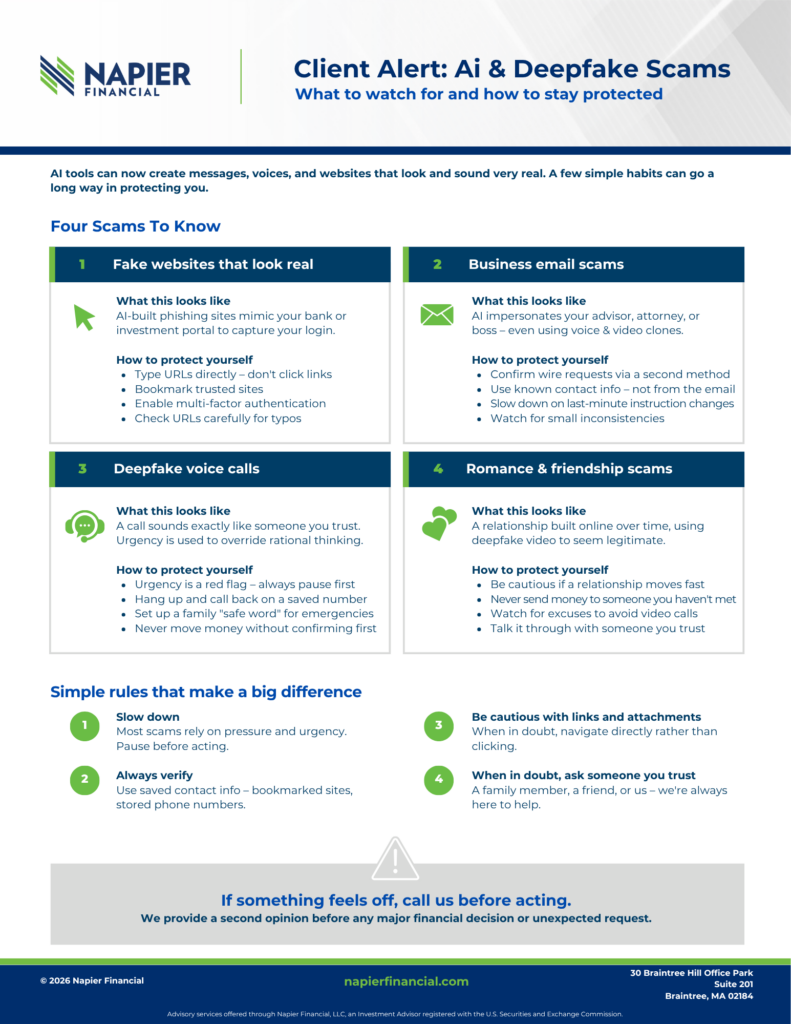
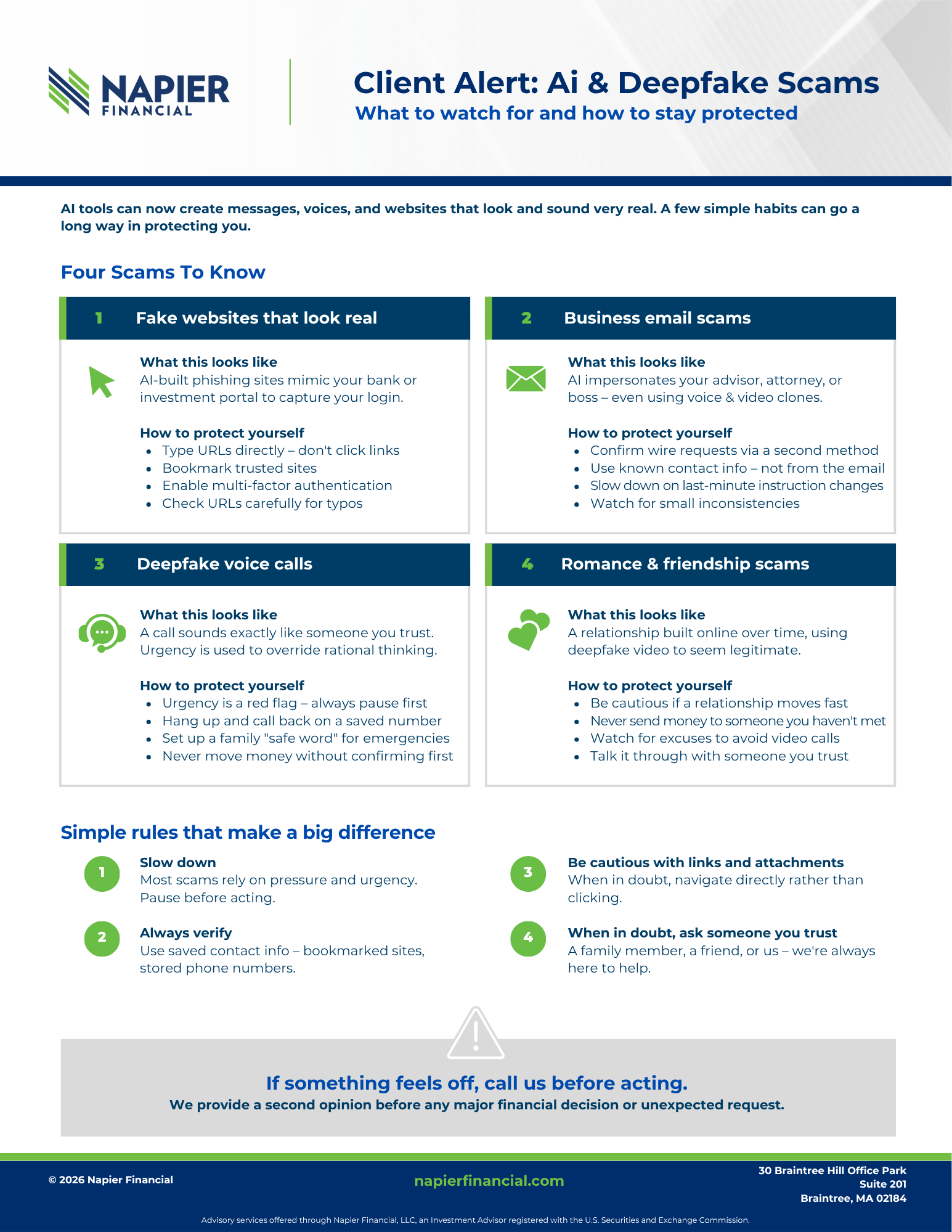
Fake Websites That Look Real
What this looks like:
Scammers are using Ai to build legitimate-looking phishing sites. You click a link in an email or text that takes you to what appears to be your bank, investment account, or other login portal. The page looks right—but it’s designed to capture your login details.
How to protect yourself:
- Don’t click links in unexpected emails or texts
- Type the website address directly into your browser
- Use bookmarks for sites you visit often
- Double check URLs carefully, looking for small spelling changes and typos
- Turn on multi-factor authentication whenever possible
Business Email Scams (Now Using AI & Voice Clones)
What this looks like:
You receive an email that appears to be from a trusted professional—your advisor, attorney, or accountant, colleague, or even boss—asking for a wire transfer, updated account details or other confidential information. Some scammers are going as far as creating voice and video clones of these people to help override any skepticism the recipient might have. These emails and communications often look and sound completely legitimate.
How to protect yourself:
- Always confirm money movement requests through a second method using known contact information, not what’s in the email
- Be cautious with last-minute changes to instructions, making sure to slow down and verify
- Pay attention to small inconsistencies in emails
Deepfake Voice Calls & “Urgent” Requests
What this looks like:
You get a call that sounds exactly like someone you trust—a family member, coworker, or even your advisor. The scammers typically use urgency to create fear and override rational thinking.
How to protect yourself:
- Urgency is a red flag – always pause and think rationally
- Hang up and call the person back using a number you already have saved
- Consider setting up a simple “safe word” with family for emergencies
- Don’t move money or share information without confirming first
AI-Driven Romance & Friendship Scams
What this looks like:
Someone reaches out online and builds a relationship over time. They may seem genuine, attentive, and consistent. Overtime, they build an emotional connection with the potential victim. Sometimes scammers even use deepfake videos to “prove” their identity, making them seem completely legitimate. Eventually, they ask for money for an “emergency” or an opportunity.
How to protect yourself:
- Be cautious if a relationship moves very quickly
- Avoid sending money or financial information to someone you haven’t met in person
- Watch for excuses to avoid video calls or meeting in person
- Talk it through with someone you trust if something feels off
A Few Simple Rules That Make a Big Difference
As you can see, there are common themes about how you can avoid falling victim to these scams.
- Slow down, as most scams rely on pressure and urgency
- Always verify by using saved information, whether that’s a bookmarked website or saved contact information.
- Be cautious with links and attachments
- When in doubt, ask someone you trust. A family member, friends, or even us – we’re always here to help
Protecting your information is a top priority for our firm. As a reminder, we will never ask you to move money or share sensitive information without advanced notice and proper verification.
If you ever receive a message that seems unusual or out of character, please reach out to us directly using a known phone number.
Scams are getting more sophisticated, but they still depend on catching people off guard. Staying aware and taking a moment to double-check can make all the difference.
If you have questions or want to talk through any concerns, don’t hesitate to reach out.
Download Our One Page Guide Below