


There’s surprisingly little formal data on what happens after a business sale. The Yale School of Management recently surveyed a group of founders who sold companies worth $10 million or more. Most were in their early forties when they sold. Within a few years, the majority were financially better off but emotionally restless. I think some of their findings are worth highlighting below.
All data and quotes are pulled from the study, which you can read here.
Purpose and fulfillment. Roughly 70% admitted they hadn’t really planned for life after the sale. They’d spent years thinking about their exit plan, but not much time thinking about their next plan. Here’s one chart that I think demonstrates the common experience well.
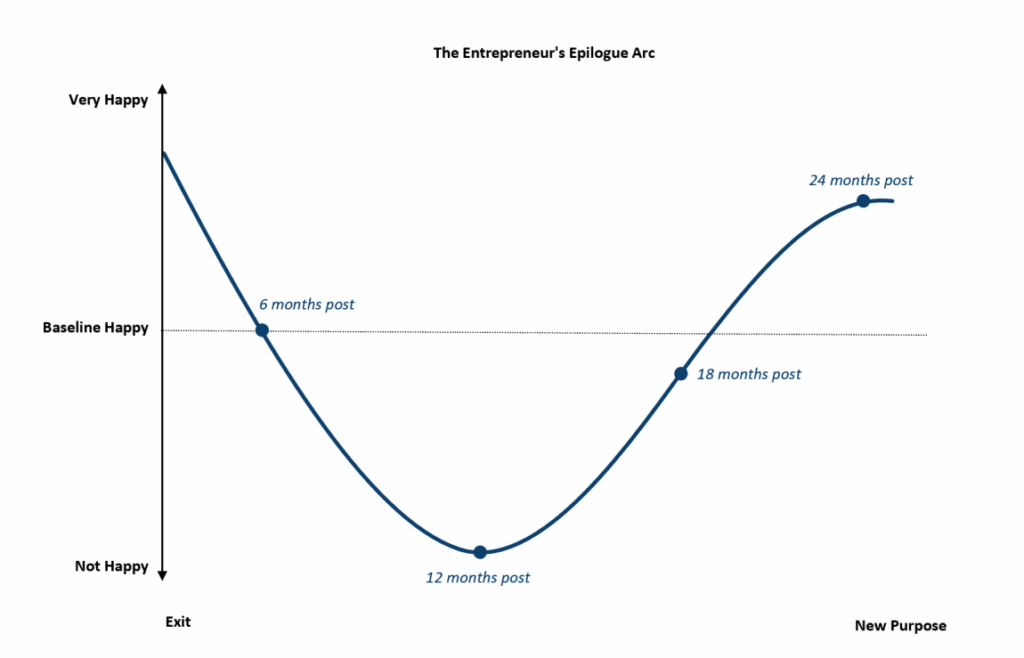
What’s more, their wealth kept growing, and yet many described feeling unanchored. A lot of them eventually found their way back into work of some kind: mentoring, investing, launching a new company, or taking on advisory roles. A decent number did not return to a full-time schedule, but they were doing enough to feel purposeful again.
The Yale study featured a few soundbites that I think are instructive to the founder who exits relatively young. Here are a few of my favorites from the study:
“I found myself afraid of commitment, afraid of getting tied up again, of losing the optionality that I’d created in my life. “Retired’ was not a label I wanted to wear.” – Jason Exckenroth, ShipCompliant
“The problem with getting everything is you run out of reasons to keep trying, and human interaction becomes impossible due to imbalance.” – Markus Persson, Minecraft, $2.5B exit
“After exiting a winning business, the entrepreneur might be approached for new commercial projects, including investment opportunities, board roles, and even CEO positions. All are flattering and enticing. Again, we encourage a one-year hiatus prior to making any long-term commitment. It can be difficult to retract from a new commitment, such as a new board role or an investment, and there is no need to make those obligations until they are fully prepared, ready, and certain of their next step.” – Recommendation by the research team
If you’re approaching an early exit or recently exited, I encourage you to spend a few minutes reading the study by the Yale School of Management. It might be a good conversation starter for yourself, your family, and your advisor team.